

Responsible Gambling: Playing Safely and Staying in Control
Responsible gambling works best when you decide your limits before a session starts, not after a poor run. JB.COM gives users practical account controls for keeping play within a planned budget and schedule. Casino games and sportsbook markets should stay within spare entertainment money, never rent, bills, savings, or borrowed funds. Read this page before choosing limits, breaks, or longer protection settings.
Recognizing the Signs of Risky Gambling Behaviour
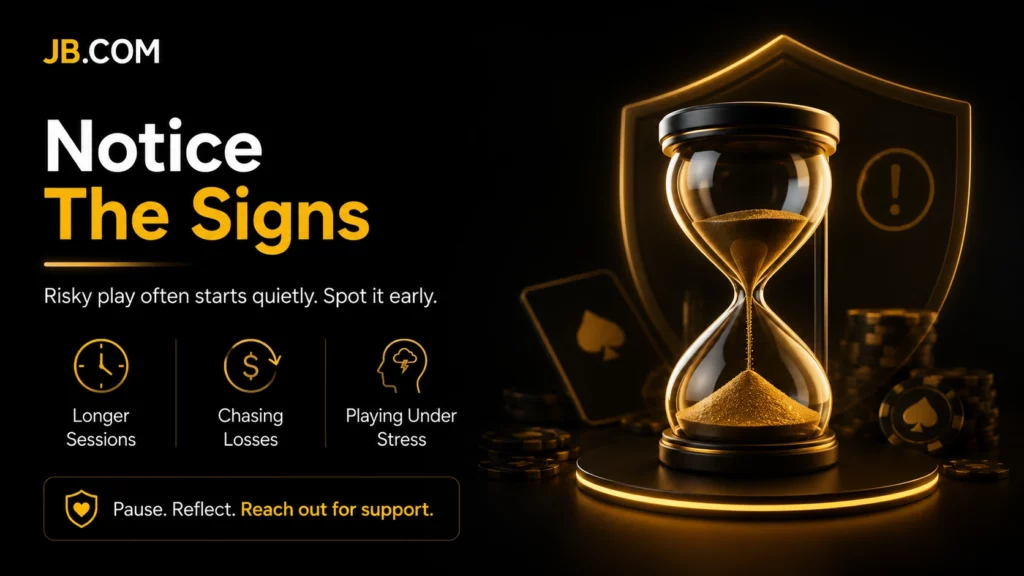
Risky gambling behaviour often starts quietly, without one obvious moment where control is lost. You may notice that short sessions become longer, or that another deposit feels like the only way to repair a previous result. Some players also begin hiding their activity, checking balances too often, or playing when tired, angry, or under pressure. These signs matter because gambling decisions made in that state are rarely measured. A simple written record of time, mood, and spend can show patterns that memory tends to soften. When gambling begins to affect work, sleep, family life, or money plans, stepping back is the right move.
Tools to Help Manage Your Play
Tools to help manage your play on JB.COM are meant to make boundaries easier to keep when a session becomes emotional. The account area includes controls for deposits, bets, losses, timeouts, and self-exclusion. These options are most useful when set calmly, before you enter a casino lobby or place a bet. The platform is intended only for users aged 18 and over, with age checks connected to account access. If you lower a protection setting, the change applies at once. If you try to raise it, a cooling period may apply, which helps stop rushed decisions.
Setting Deposit and Betting Limits
Setting deposit and betting limits gives you a clear ceiling before money reaches the account balance. Deposit controls can be arranged by daily, weekly, or monthly periods, which suits different bankroll habits. Betting and loss limits add another layer for sessions where pace can change quickly. These tools are helpful for slot play, live tables, sportsbook markets, and mixed account use. A sensible limit should come from spare funds only, after essential costs are already covered. Once a limit is reached, the healthiest choice is to stop rather than look for a workaround.
Taking a Short Break with Timeout Options
Taking a short break with timeout options can help when play starts to feel automatic. JB.COM offers timeout periods of 24 hours, 7 days, 1 month, and 3 months. During the selected break, access to gambling activity is restricted. This can be useful after a heavy loss, a stressful week, or a run of sessions that felt harder to end than usual. A timeout gives space to judge habits without making a permanent account decision straight away. For stronger protection, self-exclusion is available for 1, 3, 5, or 10 years, or for life.
Where to Find Support and Professional Help
Where to find support and professional help depends on how serious the concern feels. Account-level responsible gambling questions can be directed to the dedicated team through the platform contact route. Complaints, escalations, and privacy matters are handled through separate channels, so the issue reaches the right department. Outside the platform, independent services such as Gambling Therapy and GamCare provide guidance for people affected by gambling harm. Help can also come from someone trusted, especially if money pressure or secrecy has entered the picture. Asking early is better than waiting until the problem becomes harder to explain.
FAQ
Yes, self-exclusion restricts account access for the selected period. Available options include multi-year terms and lifetime exclusion. Opening another account during that period is not allowed.
No, gambling access is limited to adults only. Age checks are part of the account control process. Gambling functions can be restricted until the required checks are complete.
Lowering a protection limit applies immediately. Raising it may require a cooling period before the new setting works. This delay is designed to reduce impulsive changes.
Yes, timeout settings are available for short and medium breaks. These can last from 24 hours to several months. They are useful when you need distance from gambling activity but do not want long-term exclusion.
Independent organisations can provide confidential guidance. They may help with practical steps for reducing harm and rebuilding control. Speaking to a trusted person can also make the next step easier.